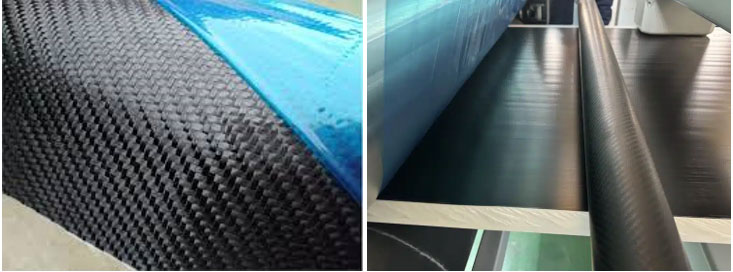
Aramid-Based Ballistic Fabrics
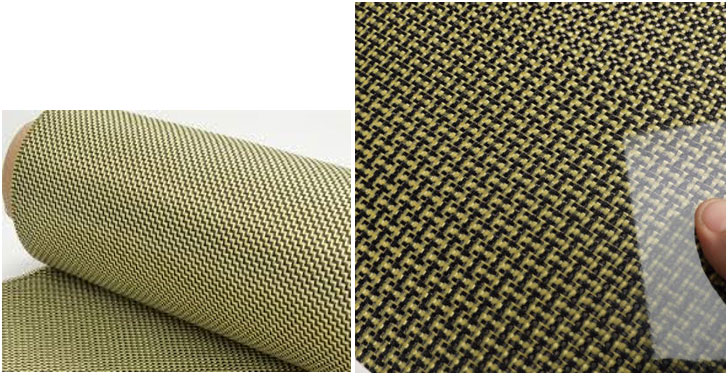
Aramid-based ballistic fabrics are widely used in personal protection systems due to their high tensile strength and exceptional impact energy absorption capabilities. They provide an optimal balance between low weight and high ballistic performance in soft armor and hybrid ballistic structures. Their woven constructions and layer configurations can be adapted to different threat levels and operational requirements. These materials offer long-term mechanical stability and reliable performance in demanding environments.
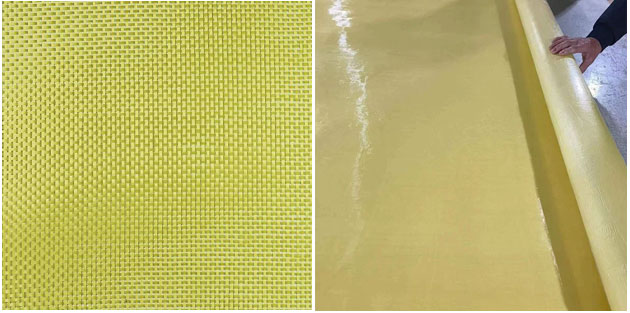
UHMWPE-Based Ballistic Textiles
UHMWPE-based ballistic textiles provide lightweight ballistic protection solutions thanks to their extremely high specific strength and low density. Their outstanding impact energy absorption capabilities make them ideal for personal protective equipment and structural ballistic applications. Available in unidirectional (UD) and multilayer configurations, these materials can be optimized for different threat levels and performance requirements. Their low weight offers significant advantages in applications where mobility and ergonomics are critical.
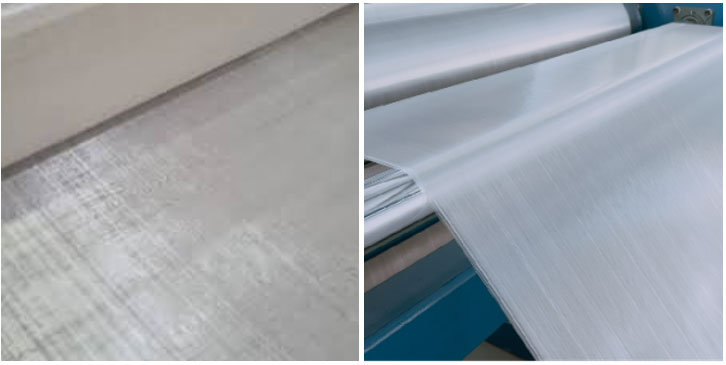
Unidirectional (UD) Ballistic Structures
Unidirectional (UD) ballistic structures enable controlled distribution of impact energy through the alignment of fibers in specific directions. UD constructions based on aramid, UHMWPE, carbon fiber, and glass fiber can be configured in various combinations according to threat levels, weight targets, and structural requirements. These materials provide an excellent performance-to-weight ratio in soft armor, hybrid armor, and structural ballistic systems. Layering strategies and fiber orientation play a critical role in determining the ballistic and mechanical performance of the final system.
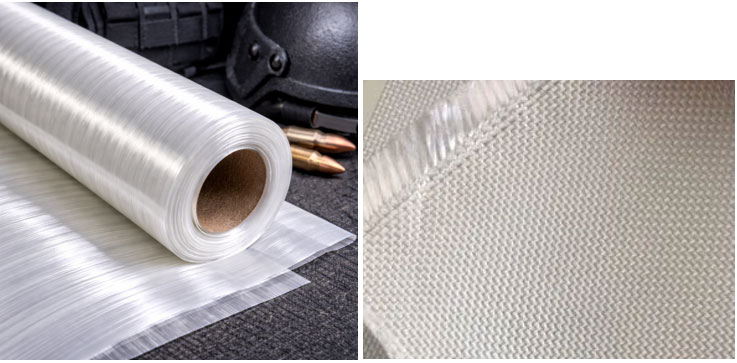
Woven and Hybrid Ballistic Textile Systems
Woven and hybrid ballistic textile systems provide balanced and isotropic protection through engineered fiber architectures. Woven fabrics based on aramid, UHMWPE, carbon fiber, and glass fiber can be used individually or combined into hybrid structures to achieve specific performance objectives. These systems offer an effective balance of strength, flexibility, and weight for soft armor and semi-rigid ballistic applications. The choice of weave pattern and fiber combination is determined according to the desired ballistic performance and operating conditions.
Pre-Impregnated (Prepreg) Ballistic Textiles
Pre-impregnated (prepreg) ballistic textiles are semi-finished materials produced by impregnating ballistic fibers with a controlled amount of resin. Aramid, UHMWPE, carbon fiber, and glass fiber reinforcements can be impregnated with thermoset or thermoplastic resin systems, such as epoxy and polyurethane, in liquid or film form. This approach ensures uniform resin distribution and repeatable performance during lay-up and manufacturing processes. Prepreg ballistic textiles provide significant advantages in process control, quality consistency, and performance reliability for structural and semi-structural ballistic applications.